What Could African Wine Be? Hardy McQueen Has a Vision.
Inside Nice Beverage Company — the collaborative wine project putting Black South African winemakers at the center.

“Is it nice?”
That’s the first question Hardy McQueen asks about any wine he’s considering working with. Before the tasting notes. Before the acidity. Before anything technical. If the answer is no, the rest of the conversation doesn’t happen.
In Hardy’s world, “nice” has specific parameters. A nice wine tastes like the year it came from — not like last year’s version of itself, not like a polished corporate house style engineered for consistency. The vineyard changes. The weather changes. The wines should change too.
Spend any time talking to Hardy and it’s clear he isn’t just talking about flavor. He’s talking about people. About culture. About who gets to participate in wine at all.
A Path To Wine
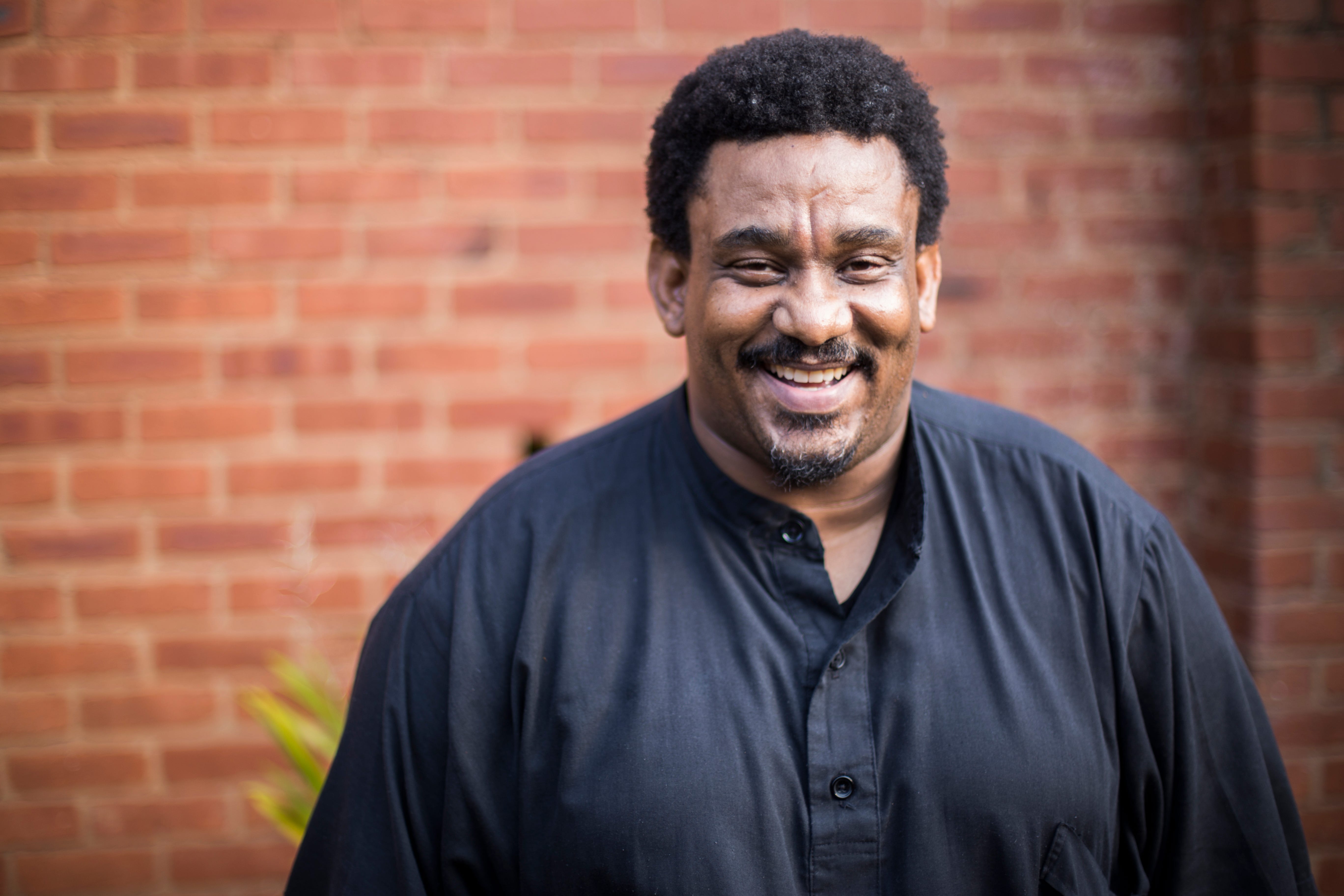
Before wine, Hardy trained as a chef in Cape Town, moved into hospitality consulting with his company Smorgasbord, and later launched one of the biggest sneaker festivals in South Africa.
He didn’t come into wine through the traditional routes. He didn’t grow up around estates or inherit vineyard land. When the pandemic shut everything down in 2020, he suddenly had the time to read, taste, and think seriously about what his own wine project might look like.
What he kept coming back to was who wasn’t there.
The Weight of African Wine History
The history of wine in Africa is something Hardy has always thought about while building Nice Beverage Company. South African wine in particular is rooted in colonization, exploitation, and apartheid. In The Wine Bible, Karen MacNeil puts it plainly, “the white colonists who began the wine industry displaced and subjugated the local Khoisan population and later brought in slaves to work the vineyards.”
Apartheid-era sanctions kept South African wine out of international markets for decades. When those sanctions lifted in 1991, the industry stayed overwhelmingly white. It still is. Black South Africans make up the majority of the country’s population and most of the labor that built the wine industry, but you wouldn’t know it from looking at who owns the estates.
Hardy is also interested in the wine history of places like Algeria. “It’s not just Cape Town,” he told me. “There’s been successful big industries around the continent, at various times. These are the things that don’t get spoken about.”
By the 1930s, Algeria was the world’s largest exporter of wine. It held that title for decades. At its peak in the 1950s, the country had more than 400,000 hectares of vineyards — more land under vine than most of the countries we think of as “wine countries” today. Until 1970, Algeria was the world’s fourth-biggest wine producer, in a country where a majority of the population was Muslim and didn’t drink.
Most of those grapes were shipped to France and blended into French bottles to bulk them up. For decades, when people thought they were drinking French wine, a substantial portion of what was in their glass had been grown in North Africa.
Thousands of years of wine history on the continent of Africa have been erased or renamed. Hardy could have tried to find a place inside that system. He started Nice Beverage Company instead.
Building Nice Beverage Company
Hardy doesn’t hand his collaborators a spec sheet. He hands them trust.
“If we aren’t vibing, we can’t make wine together,” he told me.
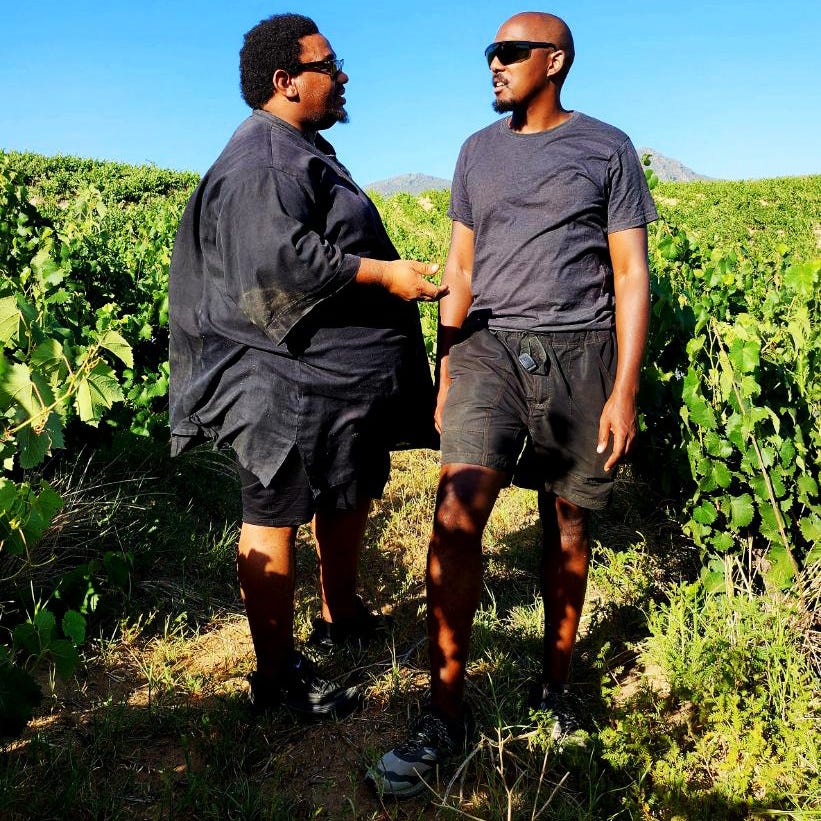
The project operates as a collaboration between Hardy and a rotating group of Black South African winemakers, many of whom work for established wineries while quietly building projects of their own. The wines come out under the Nice Beverage Company label, but uniformity isn’t the goal. If anything, the wines push against it. Each bottle reflects the perspective of the person who made it rather than a house style designed to taste the same year after year.
Building it hasn’t been frictionless. First, Hardy had to establish trust with the winemakers he wanted to work with — show them that the project wasn’t too good to be true, that Nice Beverage was something they could believe in. Then he had to find distribution outside South Africa. In a wine scene built around multi-generational estates steeped in European traditions, breaking in as a newcomer with a different vision was going to be near-impossible. So he launched Nice Beverage in the U.S. first, and brought it home to South Africa after.
Reimagining Wine Culture
That philosophy doesn’t stop at the bottle. It shapes how Hardy thinks wine should actually be experienced.
“One thing that I’m super determined about is that our tasting events — we don’t do charcuterie and cheese,” he told me. “I’m doing fried chicken. I’m doing lamb biryani. I’m doing barbecued meats.”
Wine culture has spent a long time asking people to adapt themselves to its rituals — the right glass, the right vocabulary, the right little plate of cheese. The instinct to throw a tasting that doesn’t look like every other tasting? That’s the sneaker festival guy talking. Hardy is asking the opposite question of traditional wine culture: what does wine look like when it reflects the people actually drinking it?
The Future of African Wine
Hardy sees the future as bright. “We are living in a time where there are South African winemakers that are absolutely crazy,” he said. “Seventy-five percent women that are straight killers.”
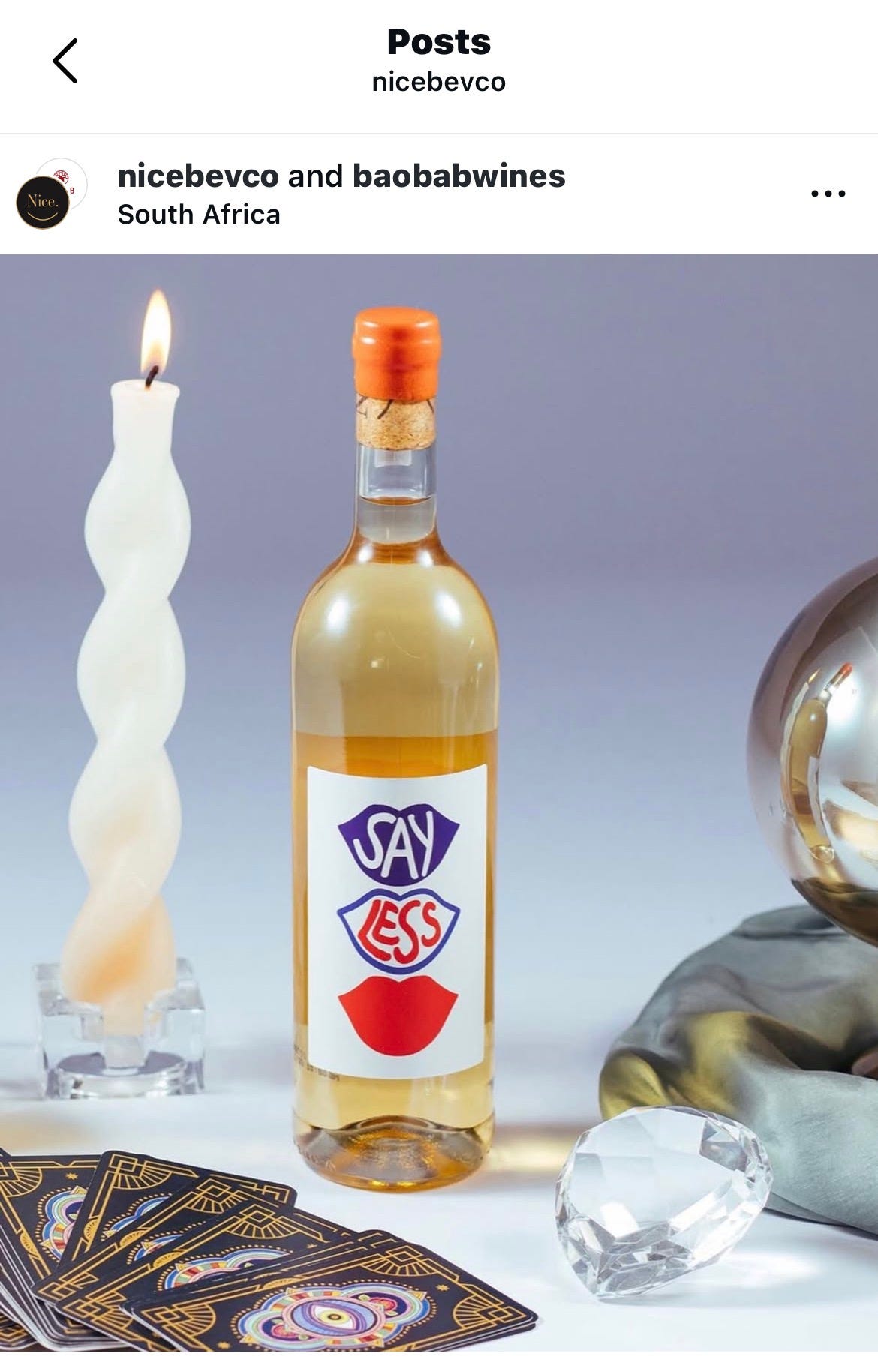
One of those women is Kiara Scott-Farmer, one of South Africa’s youngest head winemakers and the maker of Say Less Chenin and Leave It With Me, a blend of Syrah, Cinsault, and Grenache. Hardy believes Nice Beverage Company is only the beginning for Black South African participation in wine. He hopes that seeing him, the winemakers he works with, and everyone helping build the business will inspire what comes next.
“We have the generation now that can forge the future of South African wine,” he said. “That can inspire the next generation of winemakers.”
And he has his eye on the rest of the continent. He’s looking for winemakers outside South Africa, and he believes the project can spread a new wine culture across borders that have never been the limit on what African wine could be.
Tiny Pleasures, Vol. 10
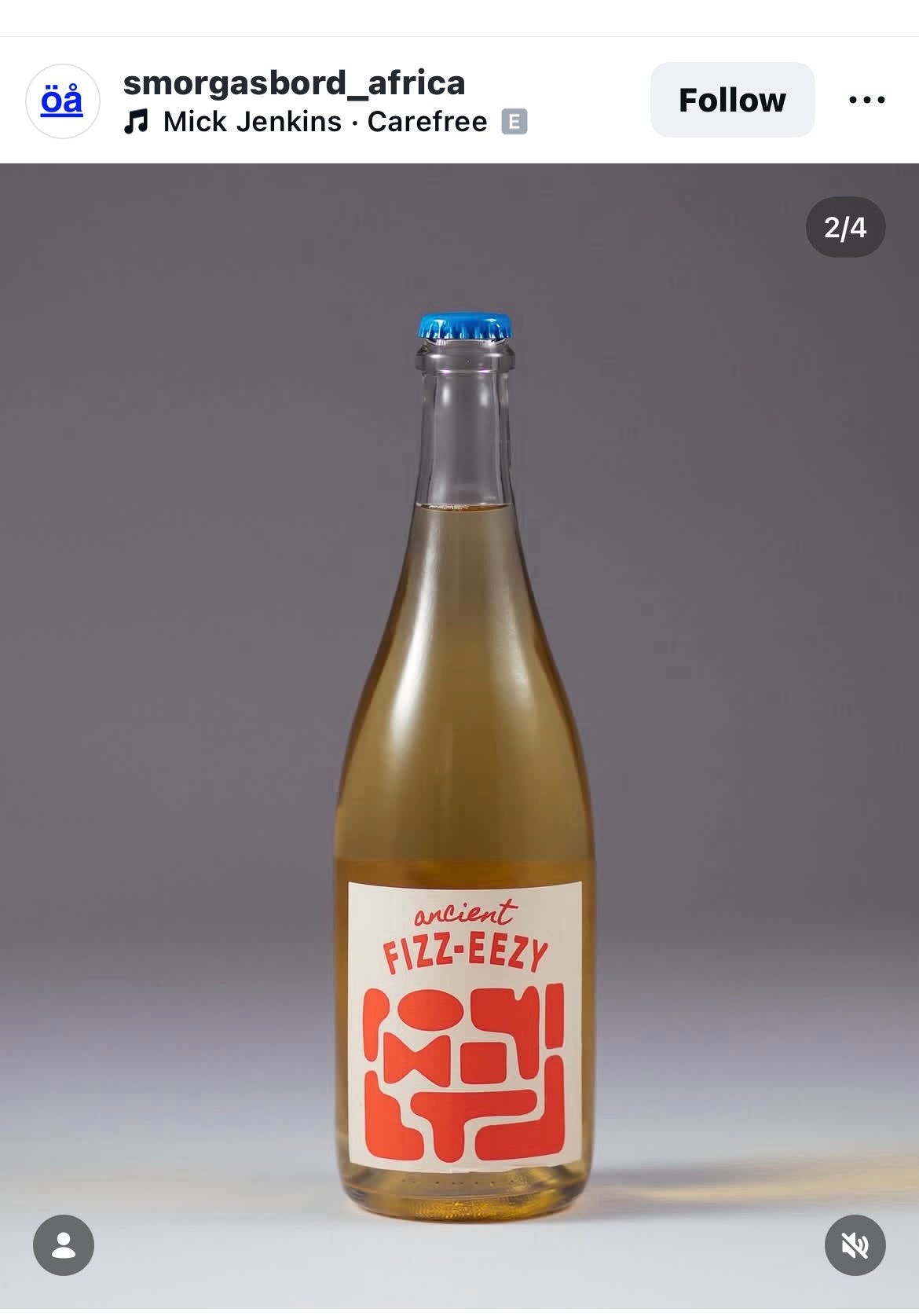
Nice Wine Co Ancient Fizz-Eezzy is a Chardonnay sparkler from winemaker Natasha Williams. Taste like citrus peel and green apple.
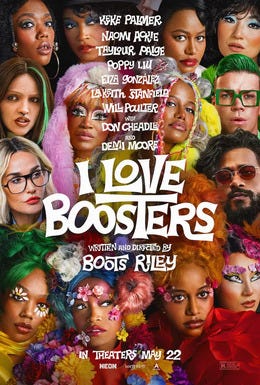
I Love Boosters is absurd and magical. There are so many singularly chaotic things happening this could have been three different movies but it’s more fun that it was all mashed together like the spin art I used to make at summer camp.
Flowers, always flowers.