
How to Start a Natural Wine Fair in 2026 (and Why It Matters Now)
Inside a new natural wine fair centering women, LGBTQ+, and BIPOC producers

There’s a kind of camaraderie and hope that runs through a wine fair. The winemaker has shown up, poured their wine, and is standing there hoping that this one tasting might connect them with someone new — someone who understands what they’re trying to do, someone who might even fall in love with the wine.
A New Wine Fair in Los Angeles
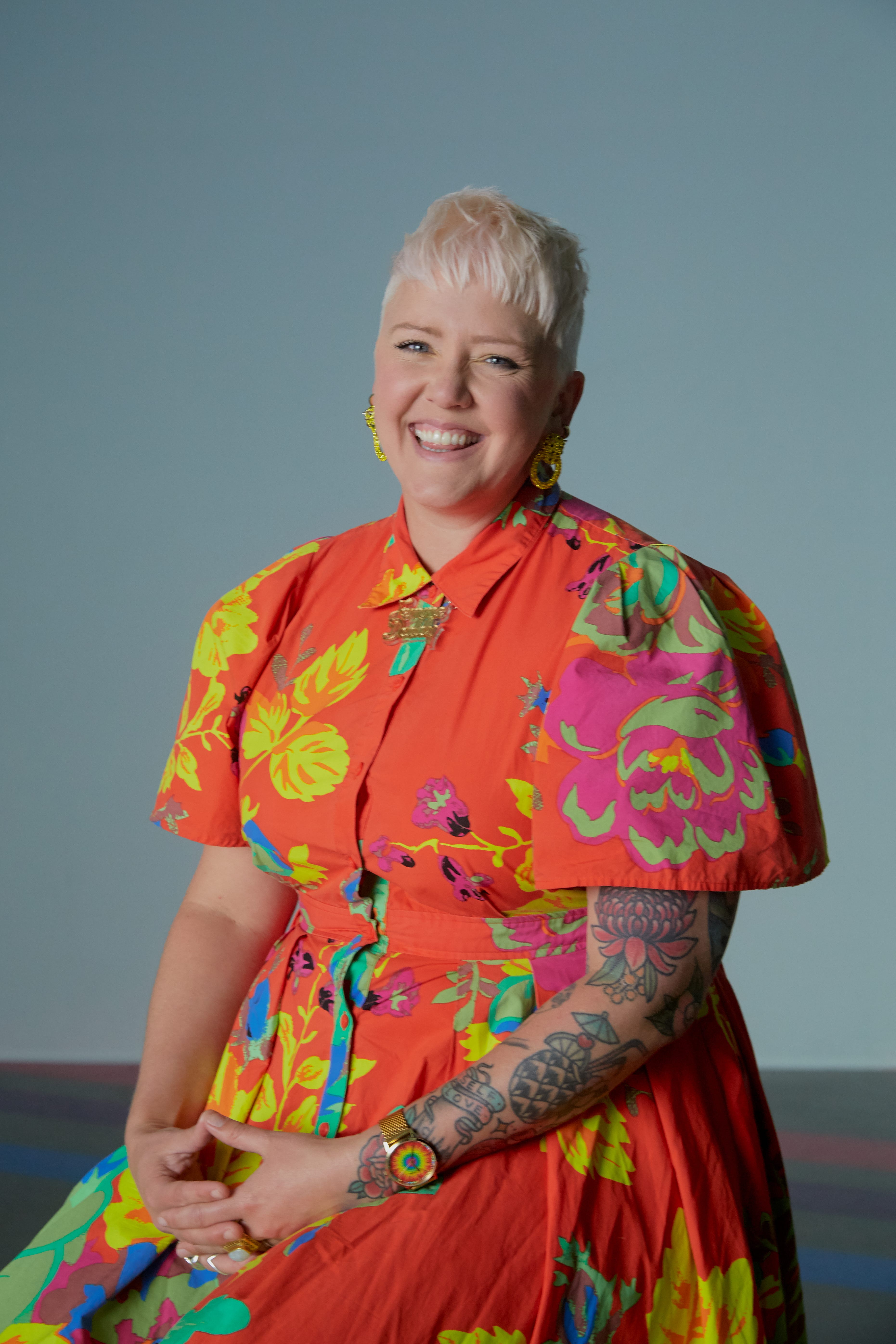
On March 29th, Los Angeles is getting a new opportunity to fall in love: the Sediment Wine Festival.
The founder, Tui Lyon, had the idea after visiting several wine fairs across Europe. What she noticed was a difference in feeling.
“They were more fun than the American festivals,” she told me. “Less rigid. Not a lot of food, but more of a vibe. It felt like a party. People sharing bottles, connecting, building community.”
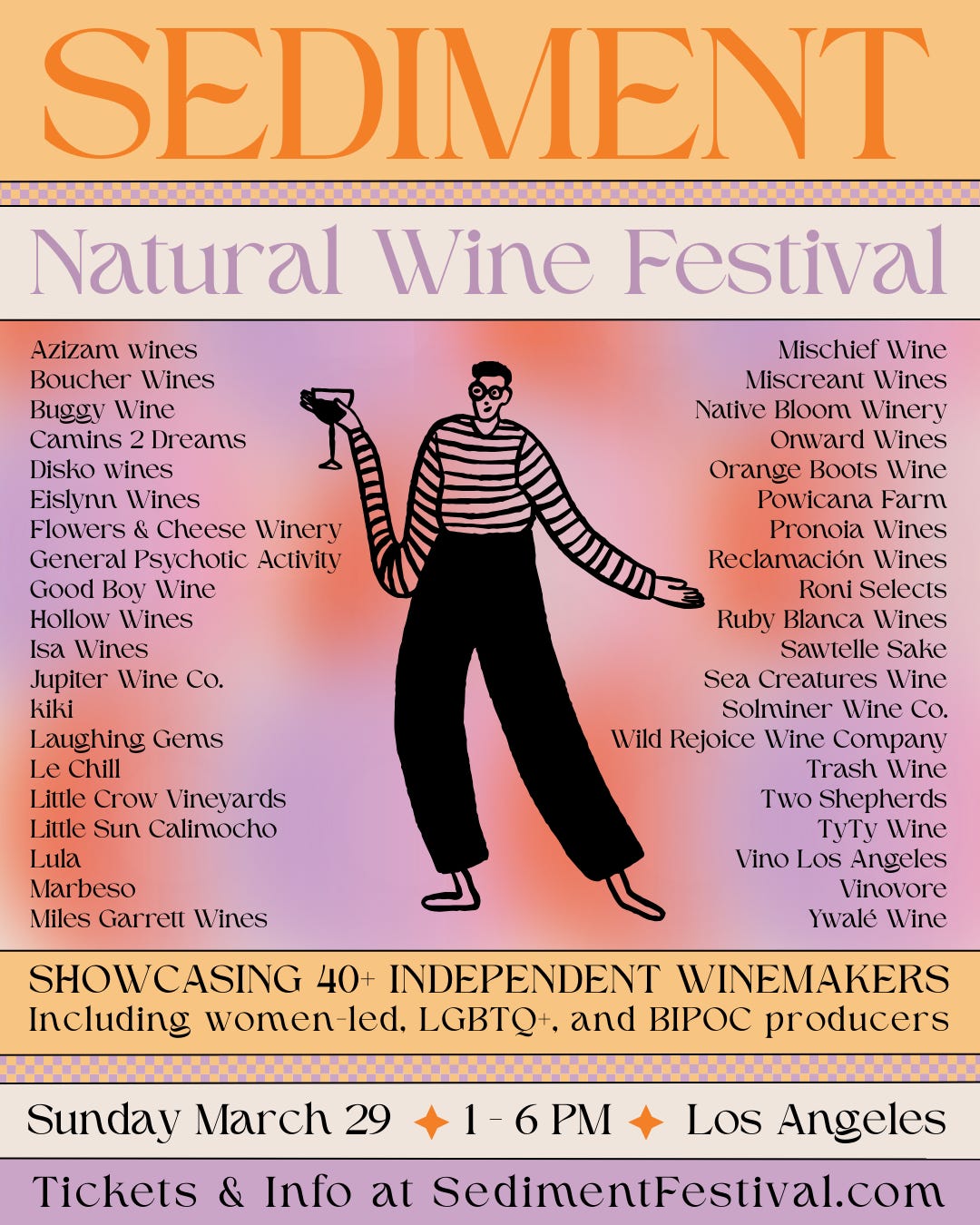
A wine fair is exactly what it sounds like: winemakers, importers, or their reps pouring their wines directly for the public or for other wine professionals. It’s one of the few spaces where you can taste widely, ask questions, and actually connect with the people behind the bottle.
There are the large-scale fairs — ProWein or RAW Wine Fair — which can feel exciting, if not a little overwhelming. Then there are the smaller, more regional fairs like The Festival of the Undiscovered Grape or Wine Fare SF.
I tend to prefer the smaller ones: a more digestible number of wines to taste, and enough time and space to actually ask a few questions. To linger a little. To have a conversation.
Sediment is aiming to create a party: a space where younger winemakers can see their wines in a different atmosphere. Where there’s still a focus on the wine, but also room for lightness and curiosity. A place that feels less like a transaction and more like a gathering.
Who the Fair Centers
What felt most important to Tui from the beginning was who the fair would center.
Sediment is intentionally highlighting women-led, LGBTQ+, and BIPOC producers — a reflection of the communities that have always contributed to the wine world, but haven’t always been given equal visibility within it.
“I want to celebrate those communities and their contribution to the wine landscape,” she told me.
That intention extends to the kind of wines being poured. Sediment is focused on natural wine, broadly defined, but thoughtfully considered. For Tui, that means producers working with organic farming, no chemical inputs, minimal manipulation in the cellar, and limited or no added sulfur during fermentation. The emphasis is also on smaller, independent producers making wine outside of corporate structures, often with a deeply personal connection to the land.
There will also be sake producers in the mix, expanding the conversation beyond wine while staying rooted in similar values of craft and care.
When I asked why natural wine culture continues to resonate right now, her answer was immediate.
“It feels like ours,” she said. “It’s newer.”
The tradition of natural winemaking may be ancient, but the culture surrounding it feels fresh, shaped by younger people, new ideas, and a different way of talking about wine.
Representation also plays a role in making natural wine feel a bit more accessible. When people see winemakers who look like them, or share similar cultural references, wine starts to feel less stodgy. Less like something you have to learn how to “get right,” and more like something you can just enjoy.
Producers are leaning into that shift and talking more openly about farming, soil, and place, but also about feeling. About vibe. About why a wine matters beyond what’s in the glass.
Why This Matters Now
Sediment arrives at a moment when wine culture is actively being reshaped by younger drinkers, by more diverse voices, and by a growing desire for spaces that feel less formal and more connected.
Wine fairs have always been about discovery. But the question now is: discovery for whom, and in what kind of environment?
On March 29th, Sediment offers one answer. Not just a tasting, but a gathering shaped by intention that reflects the people building the future of wine, and invites everyone else to be part of it.
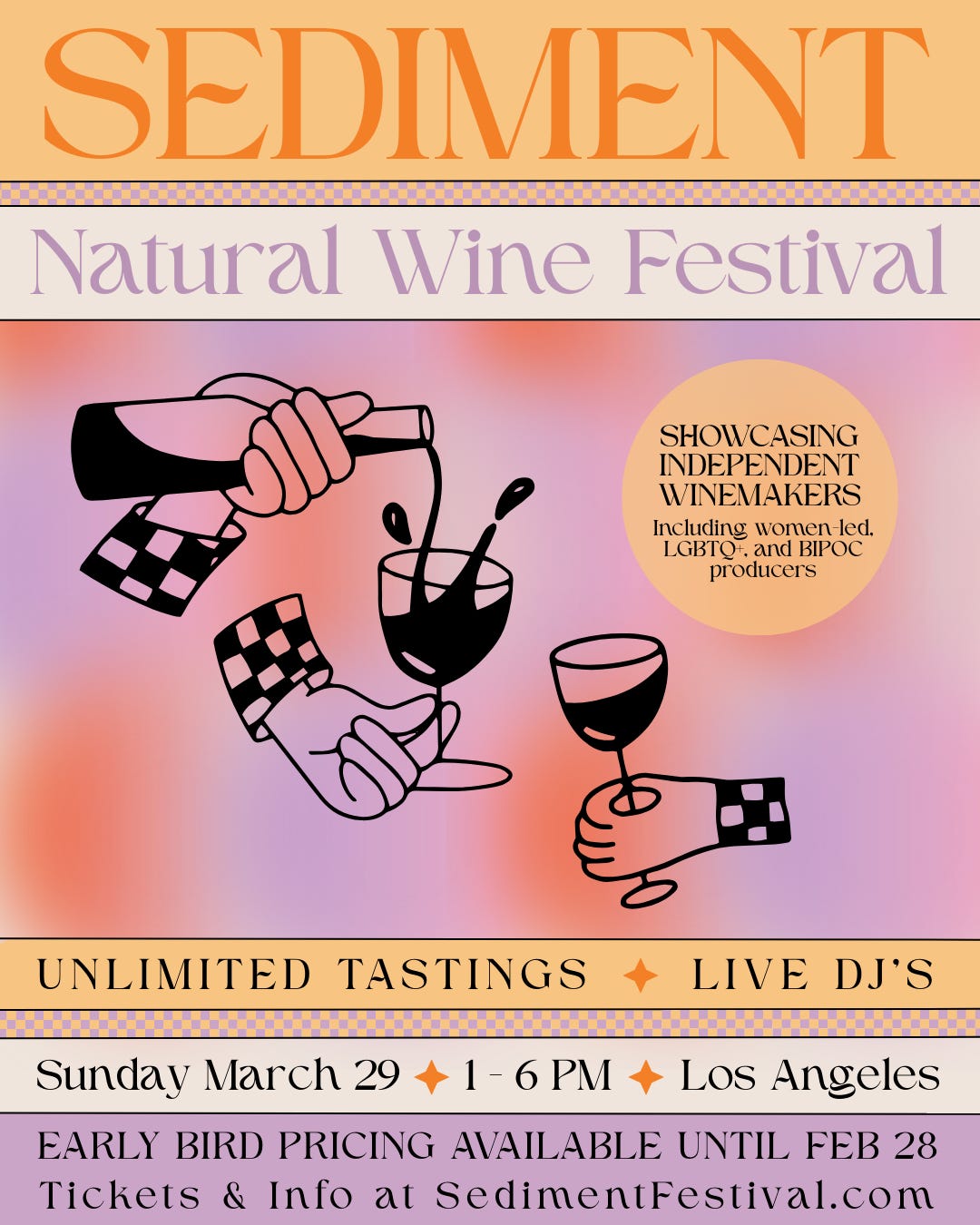
This Week’s Tiny Pleasures, Vol. 7-Inspired by Tui
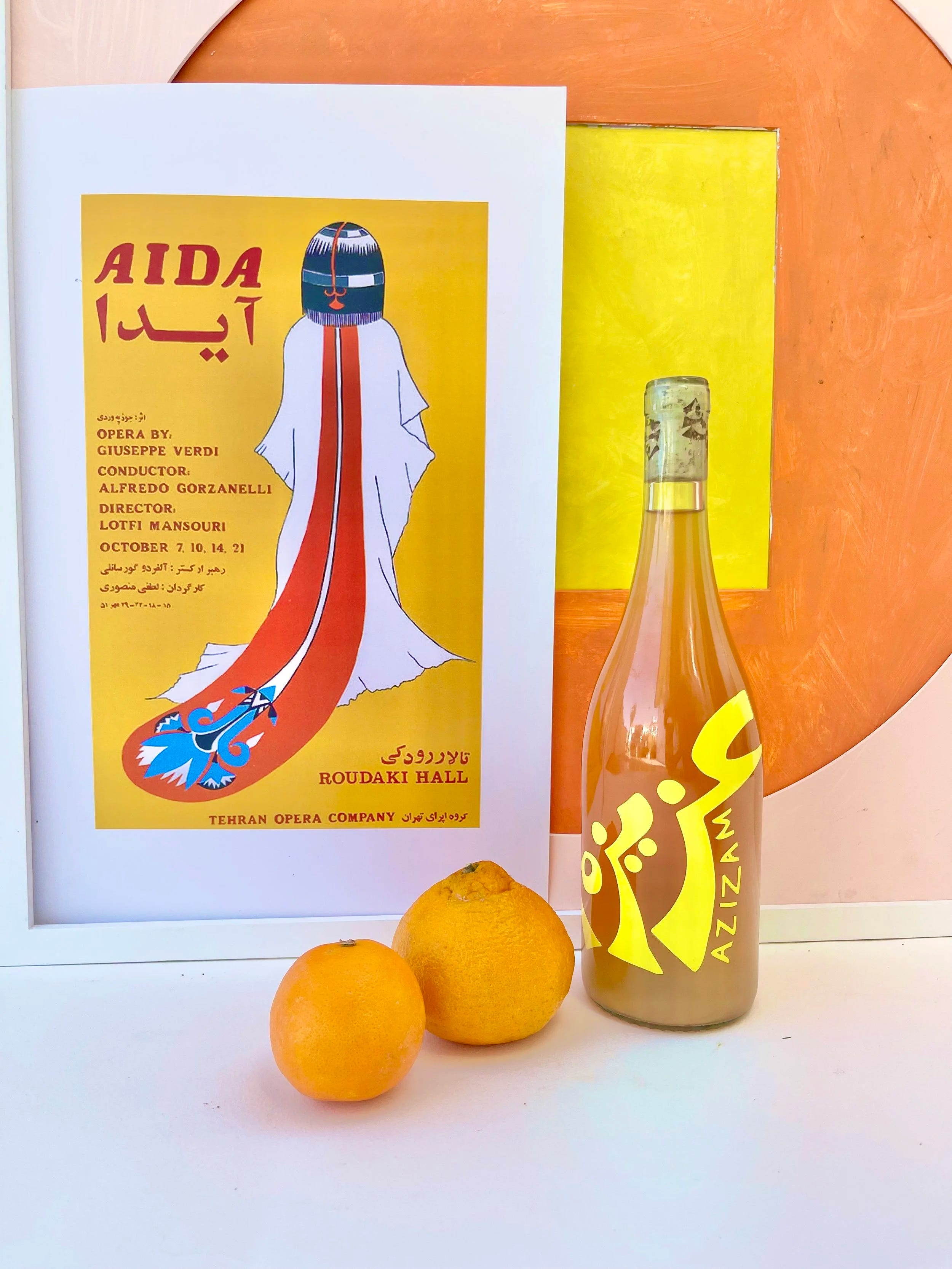
“At this time of year, when it’s warm, but not hot, I love to go for chilled medium bodied wines, something with complexity, but also light and refreshing to drink on a warm afternoon. Maryam from Azizam Wines is making exactly that, they are really interesting wines with unique flavor profiles, but also just so crushable!”
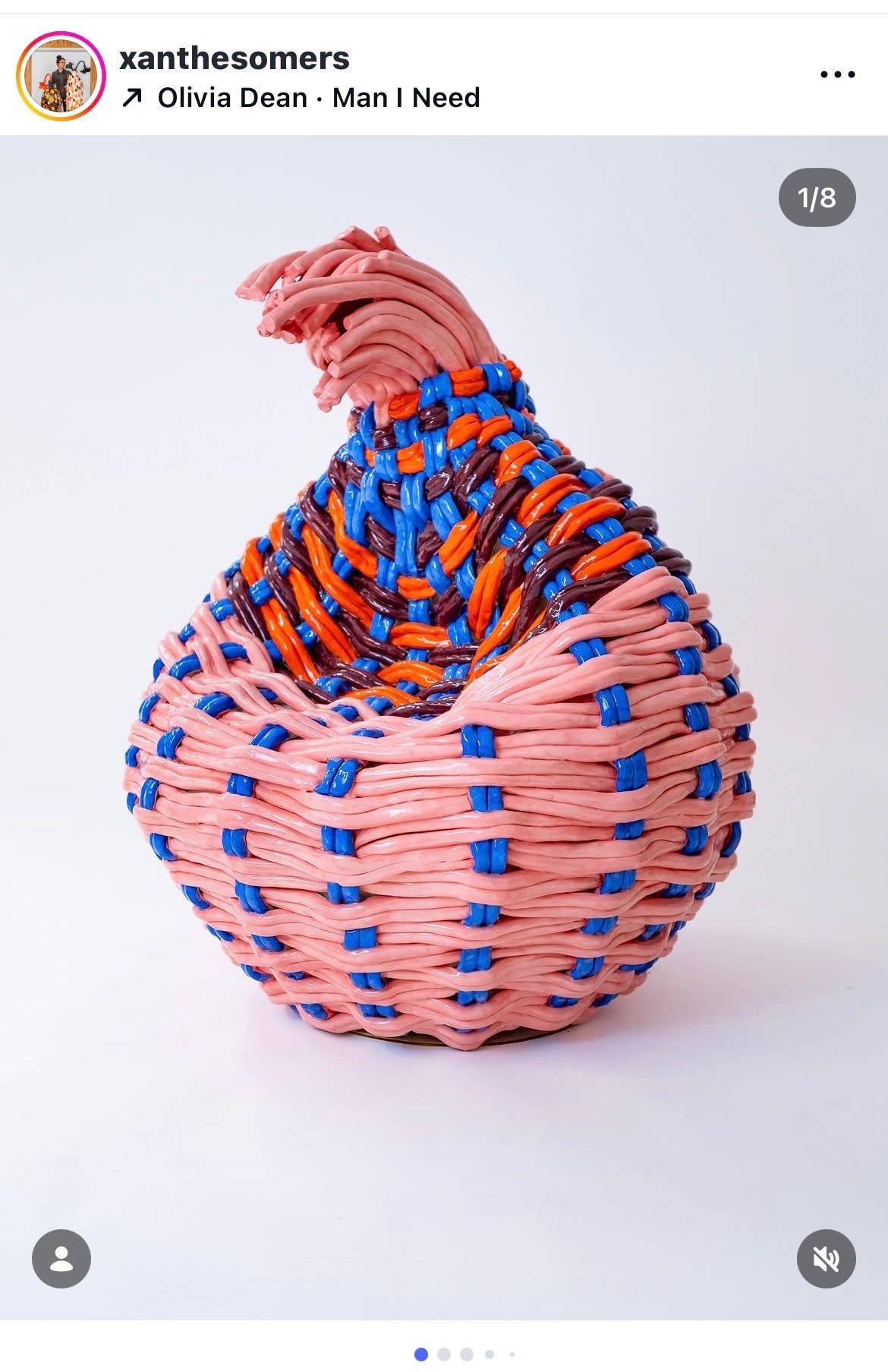
“In my spare time I do ceramics, and one of my favorite ceramicists right now is Xanthe Somers. They make the most fabulous large sculptural works that embody everything I love: They are colorful, weird, and expressive on their own, but also rooted in something much larger than the work itself. Her work explores themes of post-colonial domesticity, overconsumption and eco-racism, providing a critical reading of the extractive economies of the global south.”

“My sister is an artist and I recently performed in one of her pieces “The Uncertain Behavior of Clouds”, and it’s given me a new appreciation for these fluffy, majestic cuties in the sky. I’ve been looking up more, and it’s been refreshing to appreciate something on a deeper level, that I’ve been looking at my whole life.”