
Greek Wine Country, Seen from a Van Going 100 MPH
A week of mountain wines, long lunches, and the kind of hospitality that changes how you see Greek wine.

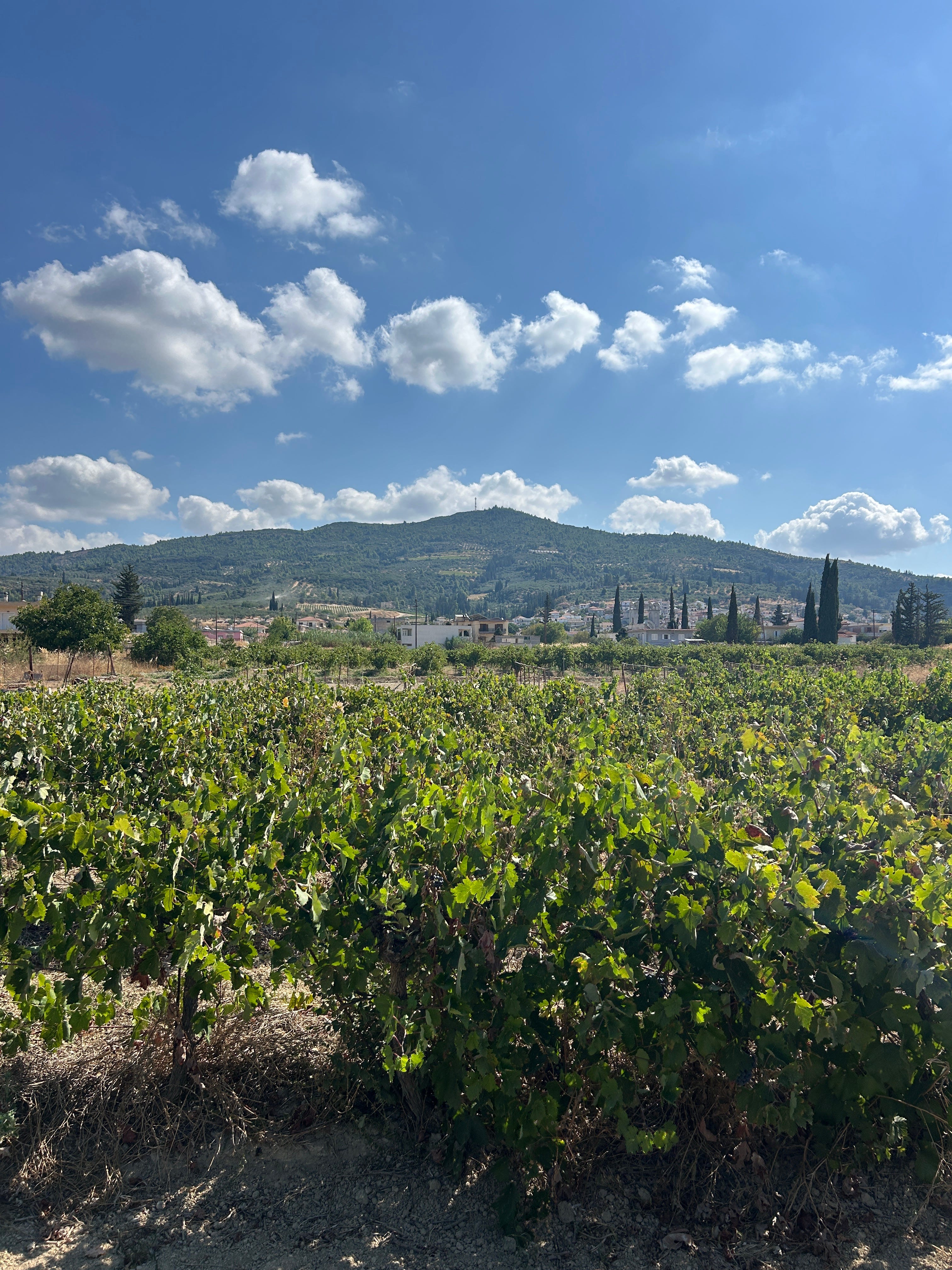
Sleeping in the back of a fast-moving van is a skill I didn’t know I possessed until my trip to Greece. I’ve always been able to fall asleep in uncomfortable circumstances, but dozing off in a twelve-person passenger van as it climbed precariously up a mountain toward a secluded hilltop town was new to me.
For a week, I had the chance to explore Greek wine across the mainland. It was technically a work trip, so I was given a cursory itinerary — enough to know when I needed to be somewhere and when it would all be over. I knew that each day would bring a new winery, a few familiar bottles, and a handful of discoveries. I knew I’d visit family farms, tour small cellars, and drink a lot of wine. What I didn’t know was how much this trip would change the way I thought about Greek wine.
Greece has one of the oldest winemaking traditions in the world. Thousands of years ago, wine was fermented and stored in clay pots called amphorae. The ancient Greeks developed methods of vine training and fermentation that they later shared through trade across the Mediterranean. Many of those early techniques — like fermenting with wild yeast, aging in clay, and relying on the rhythm of the land rather than chemical intervention — are being rediscovered today.
The modern natural wine movement in Greece isn’t so much a reinvention as it is a return. A new generation of winemakers is looking backward to move forward, embracing the ruggedness of the land and the resilience of their indigenous grapes. Across the mainland and islands, small producers are farming organically, harvesting by hand, and letting fermentation happen naturally.


There were a lot of highlights on this trip. There was the five-hour lunch that drifted into dinner, where we tried wines from Kontozisis, an organic grower in Karditsa, a rural town in the region of Thessaly. Andreas Kontozisis and his partner Aphrodite Tousia make beautiful wines from grapes like Roditis and Limniona, a red grape grown only in Thessaly. Aphrodite led us through a tasting of their new sparkling white wine, the Sun Wines, and their A-Grafo line.
We ate a salad with thirteen different ingredients, all grown in the restaurant’s garden. Later, we zoomed down the winding mountain, full and slightly sun-dazed.
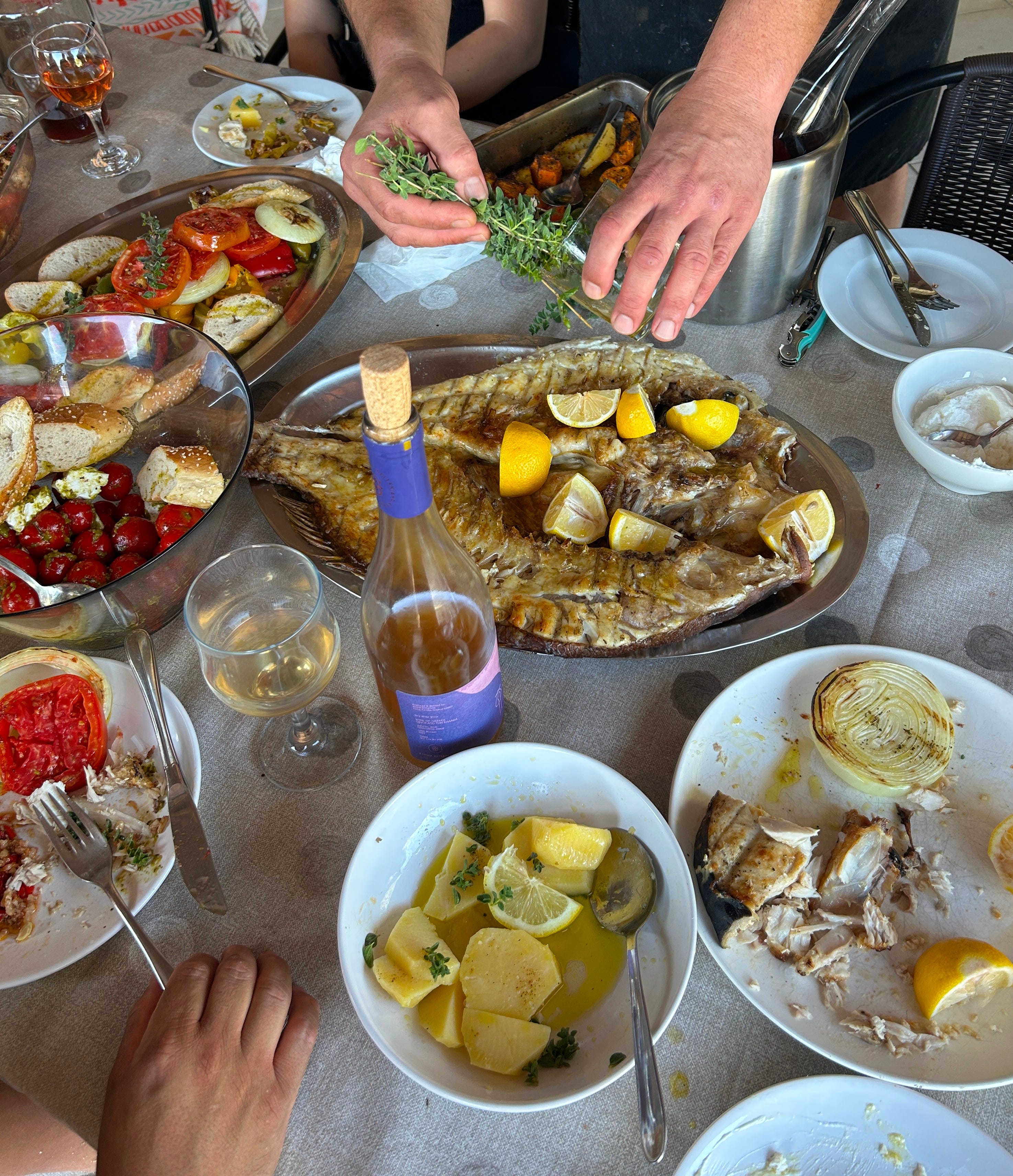
We visited Anna Halkia in Nemea, the largest wine region in Greece. We toured her small vineyard where she grows two of the hero grapes of the region, Assyrtiko and Agirtiko. She told us stories about the vines she lost to disease and the local grower who keeps trying to buy her land. He calls her his “Amazon” because of her strength; she calls him “squishy,” nose turned up in disdain. Somehow that conversation led to her family serving us grilled meats, moussaka, and gemista—baked vegetables stuffed with rice and herbs. Alongside the home cooked meal we had the pleasure of tasting her wines, made with organic grapes. My favorites was a five day skin macerated Assyrtiko that tasted like citrus, dried herbs and white flowers.
We met a quiet winemaker in Evia, Nikos Mitzifiris, who works with the local red variety Vradiano (known as “the night grape”). Nikos took us to his parents’ house, where they fed us homemade ice cream and glyko tou koutaliou — traditional candied fruit served in a small spoon on a decrotive glass plate.
There was the whole family who came out to greet us at Papras. We smelled grapes on the vine, tasted them right there in the field, and later opened the bottles they would become. We drank Roditis, Assyrtiko, Malagousia, Limnio, and Xinomavro. We were fed so well everywhere we went—fresh fish pulled from the sea that morning, pies filled with spiced meat, and more figs.
It’s easy to think of Greek wine as coming only from the islands. Sun-drenched bottles of Malvasia and salty white blends that taste like the ocean breeze. But there’s just as much magic inland. There are mountain wines, like the ones we tasted at Kontozisis in Thessaly, made from grapes that grow high above sea level where nights are cool and the air smells like pine and vineyards tucked into valleys. We stood in seaside towns one day and on rocky hillsides the next, and every landscape had its own voice, its own kind of beauty in the glass.
Greece reminded me to slow down. To let meals stretch into hours, to say yes to another glass, to pay attention to the place I’m in and the people who made it possible.
This Week’s Tiny Pleasures, Vol. 3- Greek Travel Edition
A few things that kept me from screaming into a pillow
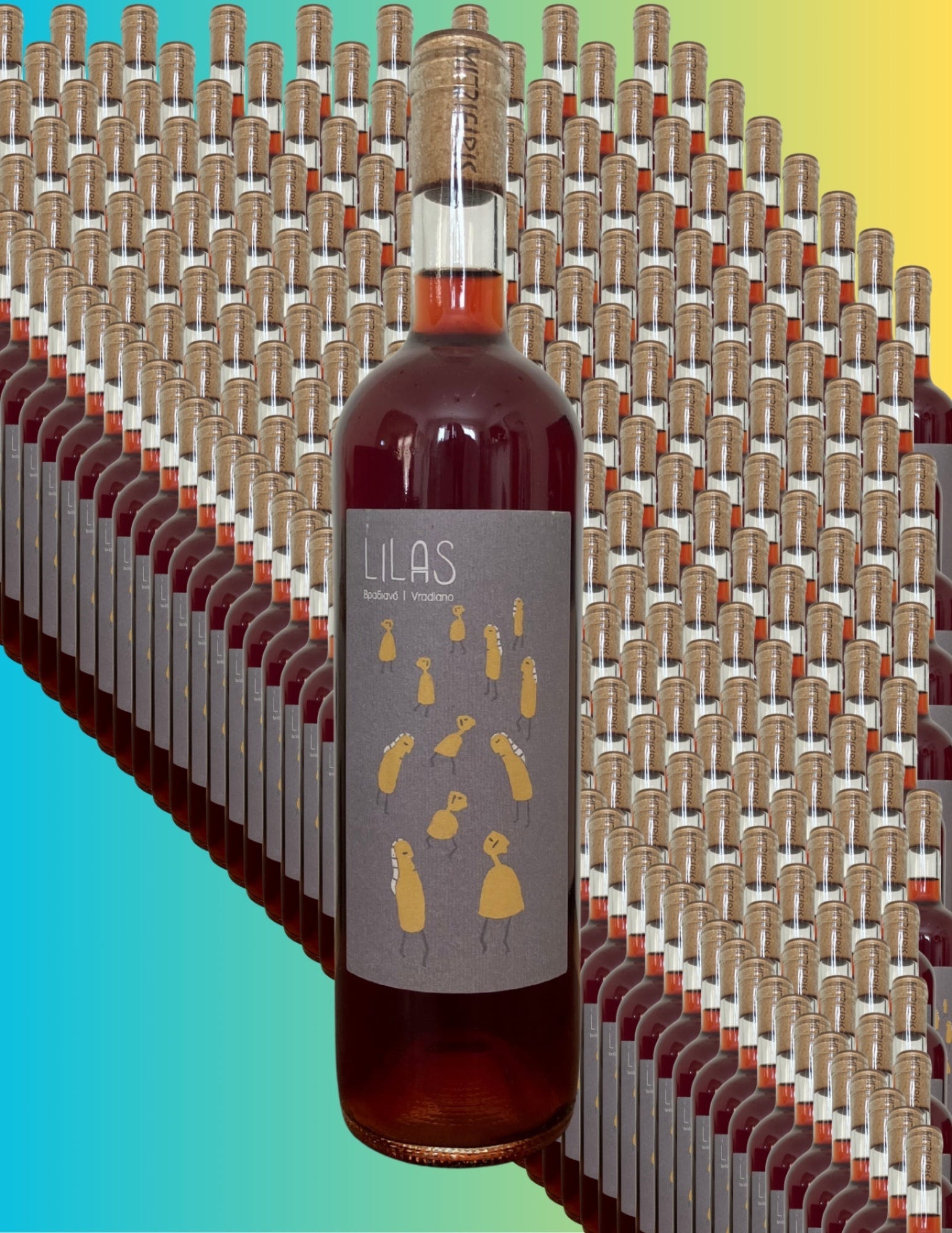
Nikos Mitzifiris’ wines have been certified organic for more than twenty years. He’s never used commercial yeast or additives. A quiet, patient man, he learned to farm from his father, and the vines at both his vineyard and his family’s home grow wild.
He works primarily with Vradiano, the “night grape,” a red variety indigenous to Evia. His cuvée, Lilas, is named after the nearby Lilas River. It’s what he considers his rosé. Spending three days on the skins before resting in stainless steel. The result is a light, dry, herbal red with a freshness that feels alive.
The wine’s place of origin is as layered as its flavor: it’s made from vines growing in the Lilantine field, a landscape once scarred by erosion from the ceramic industry and even ancient wars. In Nikos’s hands, that land is restored, and the wine tastes like patience rewarded.
I can’t say enough about the food I had in Greece. I had the great fortune of eating so many homemade meals that highlighted the quality of the ingredients. I tried Greek dishes I’d never had before — and the juiciest roast chicken of my life, served on a bed of lemon potatoes.
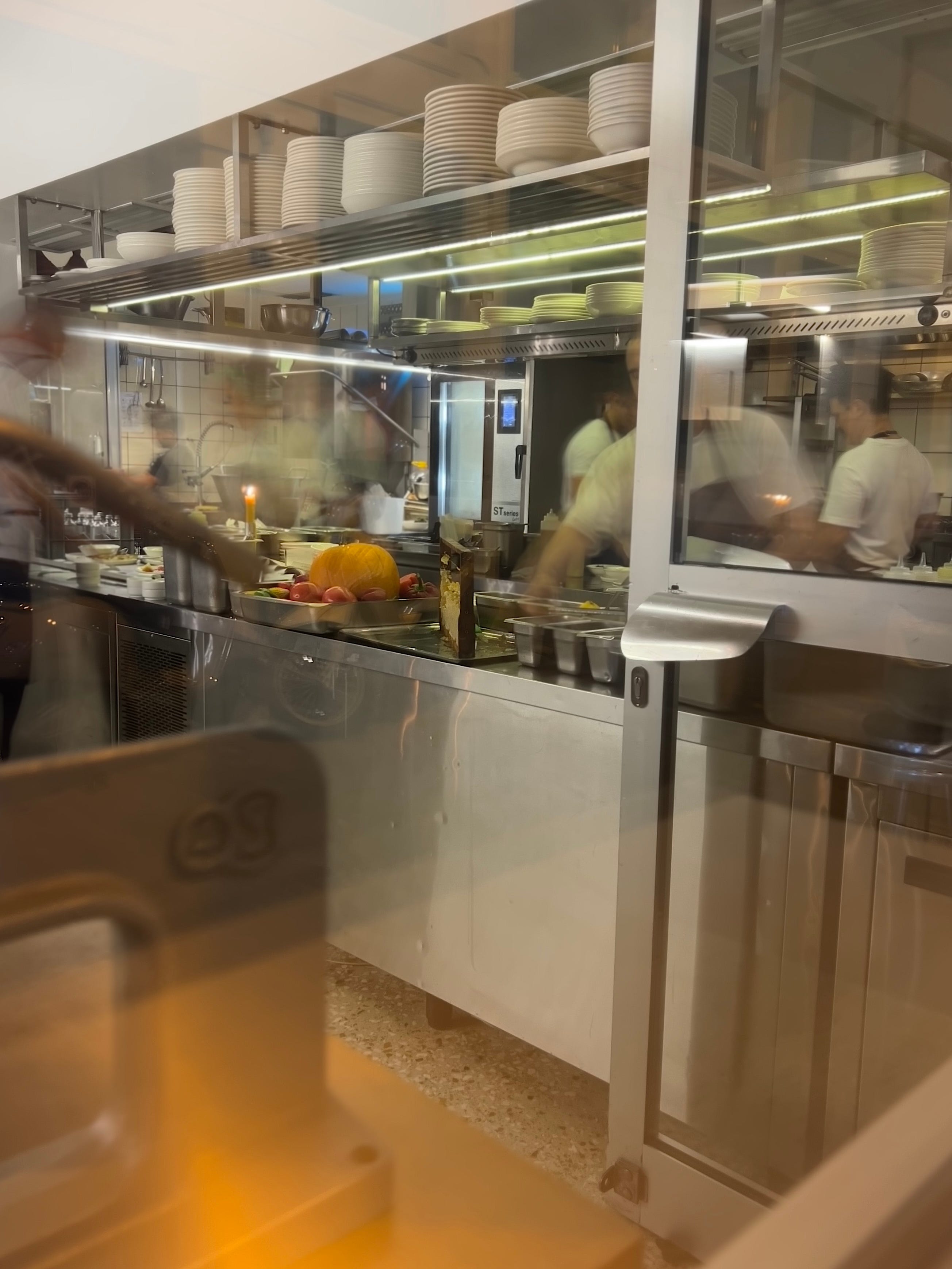
When it comes to restaurant meals, though, one stands out: Islandsia, a modern Greek restaurant in Athens. The space used to be a candle shop, so there are beeswax candles everywhere you look. The restaurant’s aesthetic reminded me of the dinner scene in Beetlejuice — modernity through an ’80s lens — all silver accents, moody lighting, and a touch of surreal glamour. Between courses, servers even offered a silver box of cigarettes to each table.
The food was beautiful: honeycomb with salty cheese, taramosalata (a dip made of cured fish roe), and steamed amberjack with chanterelles in a rich, briny broth. It’s the kind of place I’d go back to again and again.
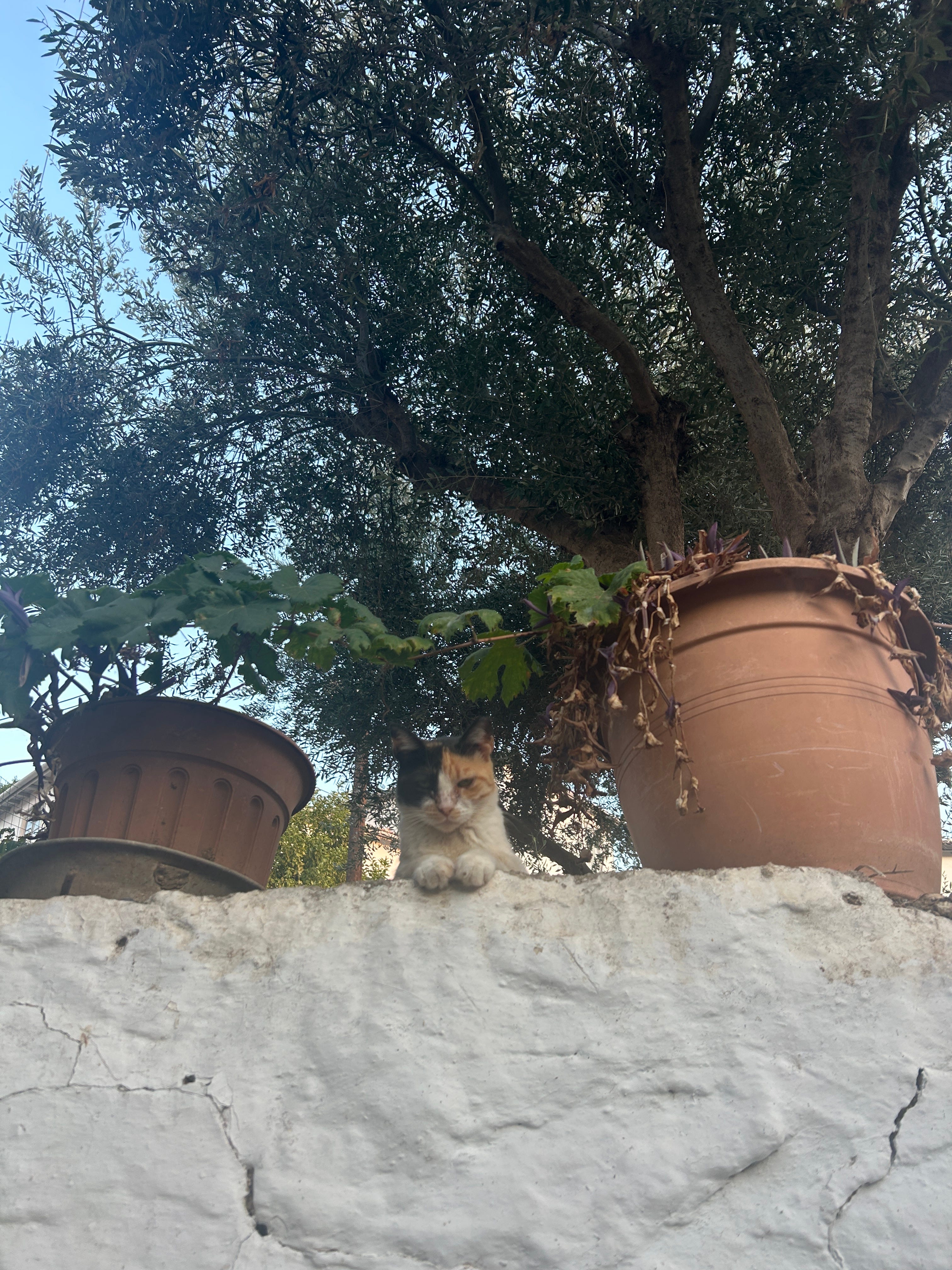
My love for cats has really grown since I moved in with my own cardboard box aficionado. That’s made me pay closer attention to stray cats — how they strut, nap wherever they please, and only let you pet them if you’re chill. Greece had some of the best stray cats I’ve ever seen, each with their own distinct personality. There were kittens that slept together in a little pile, and one tough-looking cat who seemed like he might’ve lost an eye in battle. There were cute cats and scrappy ones, lounging on doorsteps, rooftops, and café chairs. They go where they want, when they want, and I respect that so much.
My favorite Greek proverb: Δεν μπορείς να έχεις και την πίτα ολόκληρη και τον σκύλο χορτάτο You can’t have your pie whole and your dog fed
LaShea, I loved your post about Greece. Organic wine and meals that go on for hours are right up my alley. I think you and I have similar taste (which is to say very very good taste) in wine. I'm looking forward to reading your other work.