A Conversation with Co-Founder & Vigneron Rose Nemet
Armenian roots & Sierra Foothills: a story of land, lineage, and joyful experimentation.

I met Rose this summer on a wine trip to Lodi, where she spoke on a panel about the region’s diversity and versatility. She shared how her family moved from the East Coast to California to start their winery, Kareen Wines. She talked with so much affection about the people working in Lodi—the growers, makers, and neighbors—who make the area feel vibrant and ripe for experimentation.
A few months later, we hopped on a very chaotic Google Meet (grainy video, audio delay, my laptop fighting for its life) to talk about her journey into wine, Armenian winemaking heritage, what the future of wine might look like, and—because balance is important—the joy of crunchy chillable reds, vampire novels, and Jersey Shore.
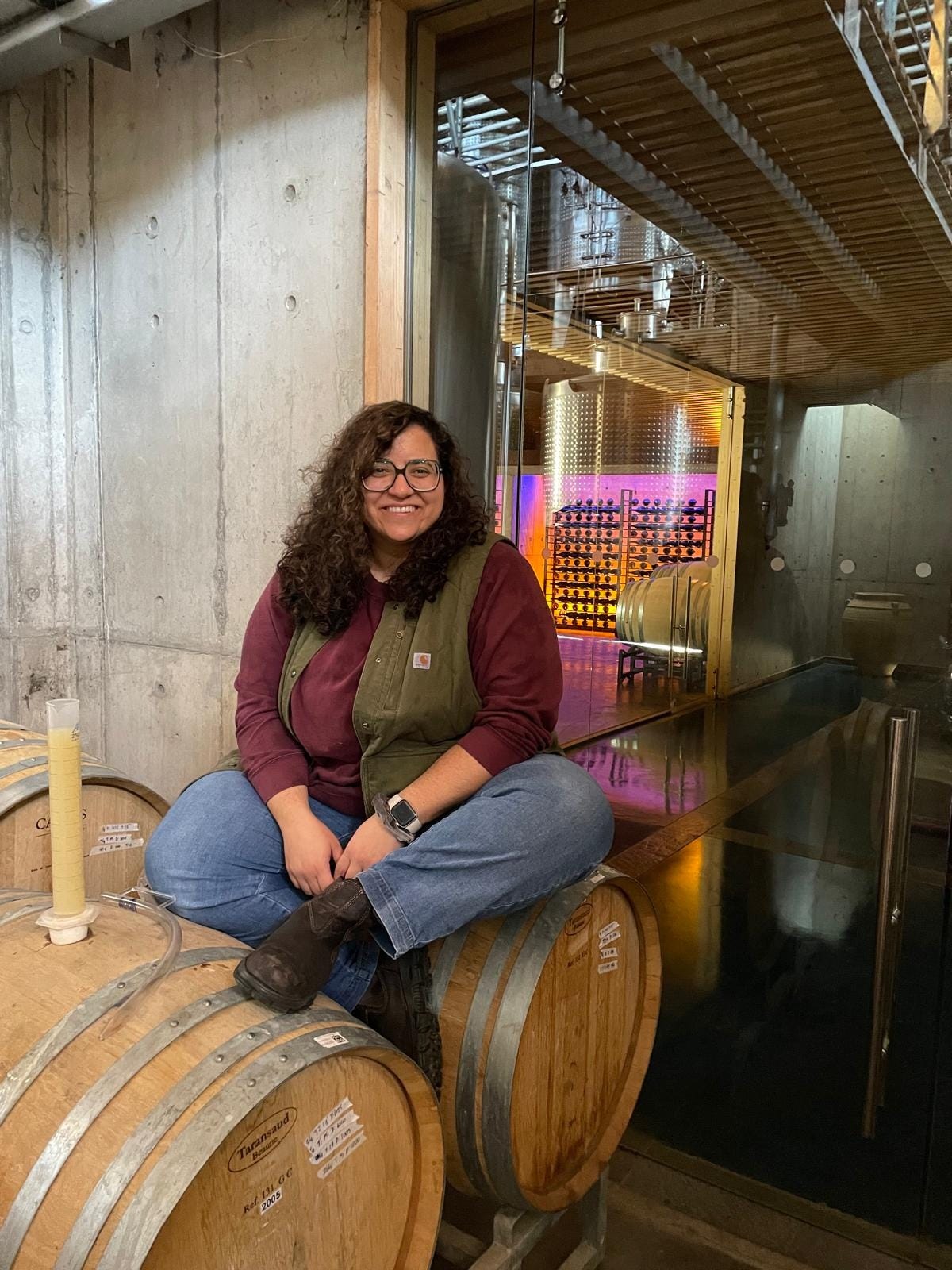
LaShea: What is your full name? What are your pronouns, and where do you call home? Rose: My name is Rose Nemet (she/they). “Home” lives in a few places for me. The Bay Area is home. Oakland is home. And what I call the “deep cut East Bay” — the far eastern side of Contra Costa County, where we first started our garage wine project — is also home.
And then there’s our vineyard in the Sierra Foothills, which feels like a wine home in a very important way.
L: What is your role at Kareen?
R: I always say I wear hats, tiaras, beanies, and baseball caps.
My brother is the head winemaker, and I do everything in between, from marketing, sales, and business development to operations, vineyard work, and cellar support. In 2021, I became deeply involved in production decisions and even took a sabbatical from my 9–5 to work a harvest at an organic commercial winery in Chile.
So I’m assistant winemaker, farmer, sales director, event planner… I do just about everything.
L: What made you and your family move from New York to California?
R: Our journey into wine is rooted in our Armenian identity. Armenia is part of an ancient wine culture; there are hundreds of indigenous Armenian grapes, and wine is ingrained in our ancestral memory.
We also spent time in Georgia, another ancient wine region. During the Soviet era, Armenia was pushed toward brandy while Georgia was allowed to keep more of its wine identity, which disrupted Armenian winemaking. Seeing that renaissance emerge again in the last couple of decades really spoke to us as a family.
We immigrated to New York City, then to California when my brother and I were teenagers. One of the first things we said as a family was, “This is incredible wine-growing land. What if we tried to make wine?”
We bought a house in East Contra Costa and planted grapes in the backyard. That’s very us, we don’t do things casually. We started making wine in 2010, became a licensed winery in 2018, and launched our brand in 2019. It was about reclaiming our heritage and exploring how Armenian sensibility expresses itself in California soil.
L: Why did you choose to acquire vineyard land rather than open a tasting room like a lot of young wineries do?
R: We considered three options:
A production facility
A tasting room or co-op space
Viticulture and land
Land felt the most honest, the most aligned.
“You can’t make good wine with bad grapes.”
Owning and farming 40 acres in the Sierra Foothills let us root ourselves in the full cycle from soil to bottle. It’s more work, but it’s the work that matters.
L: Was there a particular wine or moment that really shifted something for you?
R: It’s really a couple of things. If I trace my love of wine back, it probably started with celebration wines from when I was a kid—sparkling wine, champagne, those special-occasion moments. But what truly crystallized my love of wine and my excitement for winemaking was realizing that good sparkling wine doesn’t only come from Champagne.
Years ago, I tried a Crémant from Alsace—a brut with this beautiful balance of acidity and dosage—and I remember thinking, oh my God, this tastes like Champagne. Learning it wasn’t was a total SpongeBob moment for me, like realizing wine is galaxies. It showed me that incredible sparkling wine can come from places outside the one region we’re always taught to associate with it. That really shifted my understanding of what’s possible, especially as we’re excited about becoming a sparkling producer down the line.
Another thing that gets me really excited about wine is discovering new—or rather, ignored—narratives in winemaking. For example, Gaza was once one of the most important Phoenician ports exporting wine to Rome, and what’s now France, and Greece. These aren’t untold stories; they’re just left out of the dominant wine narrative. I’m inspired by that, and it motivates me to be a voice in this space and to make really delicious wine that helps shift those narratives.
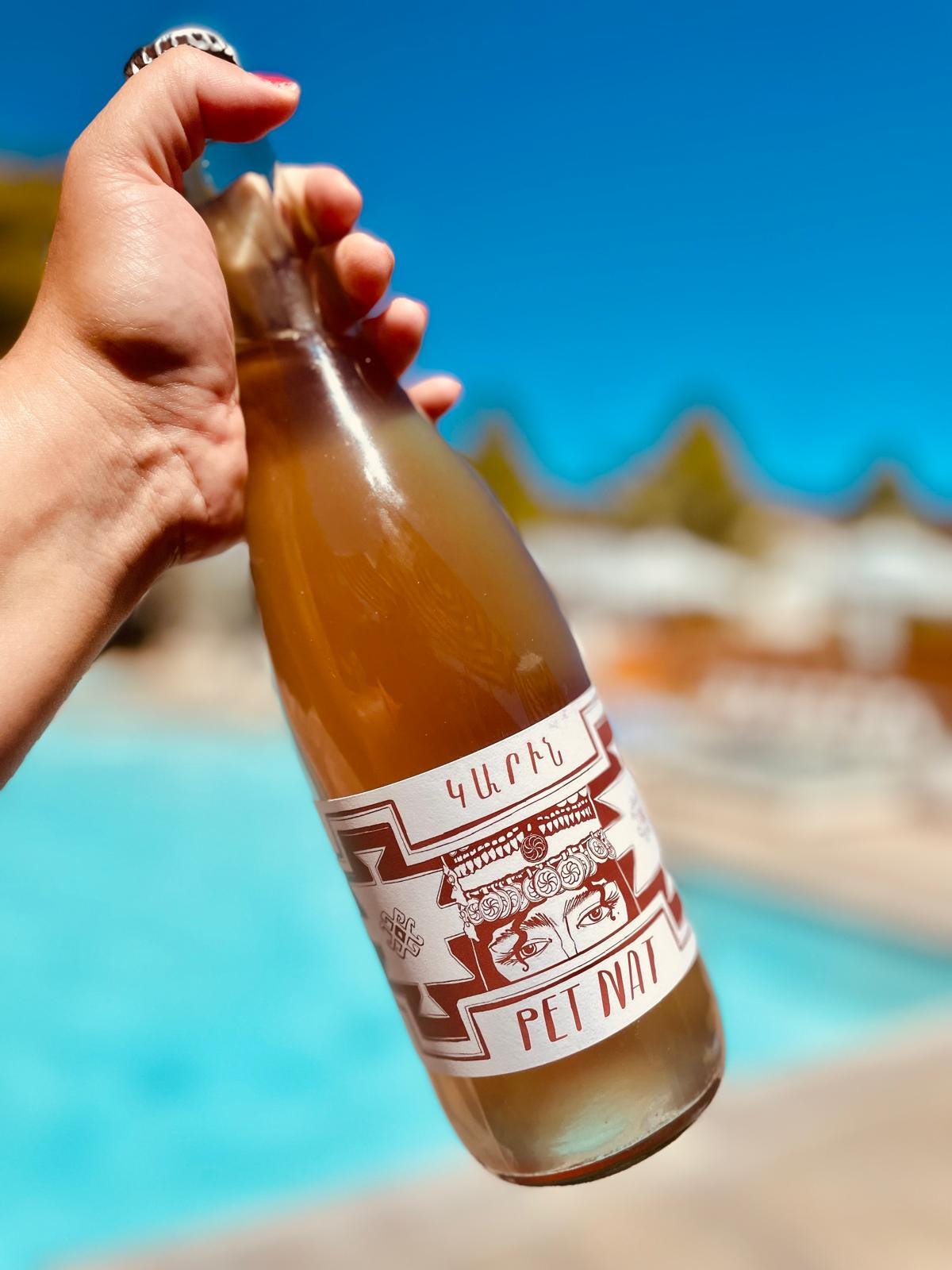
L: Let’s get into your journey. What has been the most memorable moment in wine for you so far?
R: There are so many, but one really stands out. And not to make this a bummer, but it’s a hard memory that I feel I have to share.
I would be so remiss if I didn’t talk about Artsakh and the loss of indigenous Armenian land, which happened very recently in 2020. As some background for anyone who doesn’t know: in 2020, Armenian indigenous lands were invaded and stolen by Azerbaijan with the help of Turkey.
The Armenian Highlands have around 400 registered indigenous Armenian grapes, and probably a thousand more that aren’t even mapped or documented. But Artsakh, to the south, was its own incredibly unique and beautifully fertile terroir—distinct from the Highlands, deeply tied to history, and home to grapes and winemaking practices that go back millennia.
The future of that land as a wine region is now uncertain, and that grief has stayed with me. In September 2023, Armenians were forced off their indigenous land. It was the first time in thousands of years that there were no Armenians living in Artsakh. That is a very deep, difficult memory for me.
But I believe we will be back. Armenians will return to our land, and there will be wine made there again. I hold onto that.
L: Thank you for sharing that. I want to shift a little while staying in the realm of what inspires you. How do you stay inspired when the work — and the world — is heavy?
R: A couple of things keep me inspired. First, there’s that old adage “ABC—always be closing,” but for me it’s ABL: always be learning. The wine world is everywhere—centuries of tradition, ancestral practice, land, connection, stewardship. That is what keeps me enraptured, excited, and motivated.
And honestly, having access to farming feels like cheating, in the best way. Every time I’m in the vineyard, I learn something new. We’re doing an R&D project bringing an indigenous Armenian grape to California to see how it expresses itself here, which means learning about grafting, growth, and soil. Every day, I set aside time to understand something—how to approach a seafood-focused restaurant with our Chenin or Viognier, more research, more tasting. Every meal is a classroom. Every moment is a learning moment.
What also inspires me is the bigger mission—shifting narratives. We’ve spent so much of this conversation talking about ancient winemaking, indigenous varieties, and stories that aren’t widely known. That excites me every day.
And on top of that, my family has always been made up of gatherers and conveners. Even when we first immigrated to the U.S. with very little, everyone gathered in our tiny one-bedroom walk-up in Brooklyn. Friends, neighbors—whoever could fit. That spirit of community and connection is still what drives me and inspires me.
L: What do you think the future of wine looks like?
R: I think the future of wine is tied to what’s happening culturally right now. Younger generations aren’t going out as much, they’re not celebrating or gathering the way previous generations did, and that’s connected to bigger societal issues—economics, overwhelm, the moment we’re living in.
But that’s also what makes wine interesting. It isn’t just a luxury commodity; it’s hospitality, community, and connection. So the question becomes: how do we respond to what people actually need right now?
There will always be a time and place for a big, bold Napa Cab, and I love those wines. But I’m really excited by younger drinkers saying, “We want something else.” When you look at things like the roughly 70% drop in what Gen Z spends on going out compared to millennials, or just the general sense of austerity and inflation, it’s clear people want wines that feel lighter—both in style and in approachability.
So yes, I think the future of wine is moving toward lighter, fresher styles, wines that are joyful and drinkable but still thoughtful and well-made.
This Week’s Tiny Pleasures, Vol. 6-Inspired by Rose
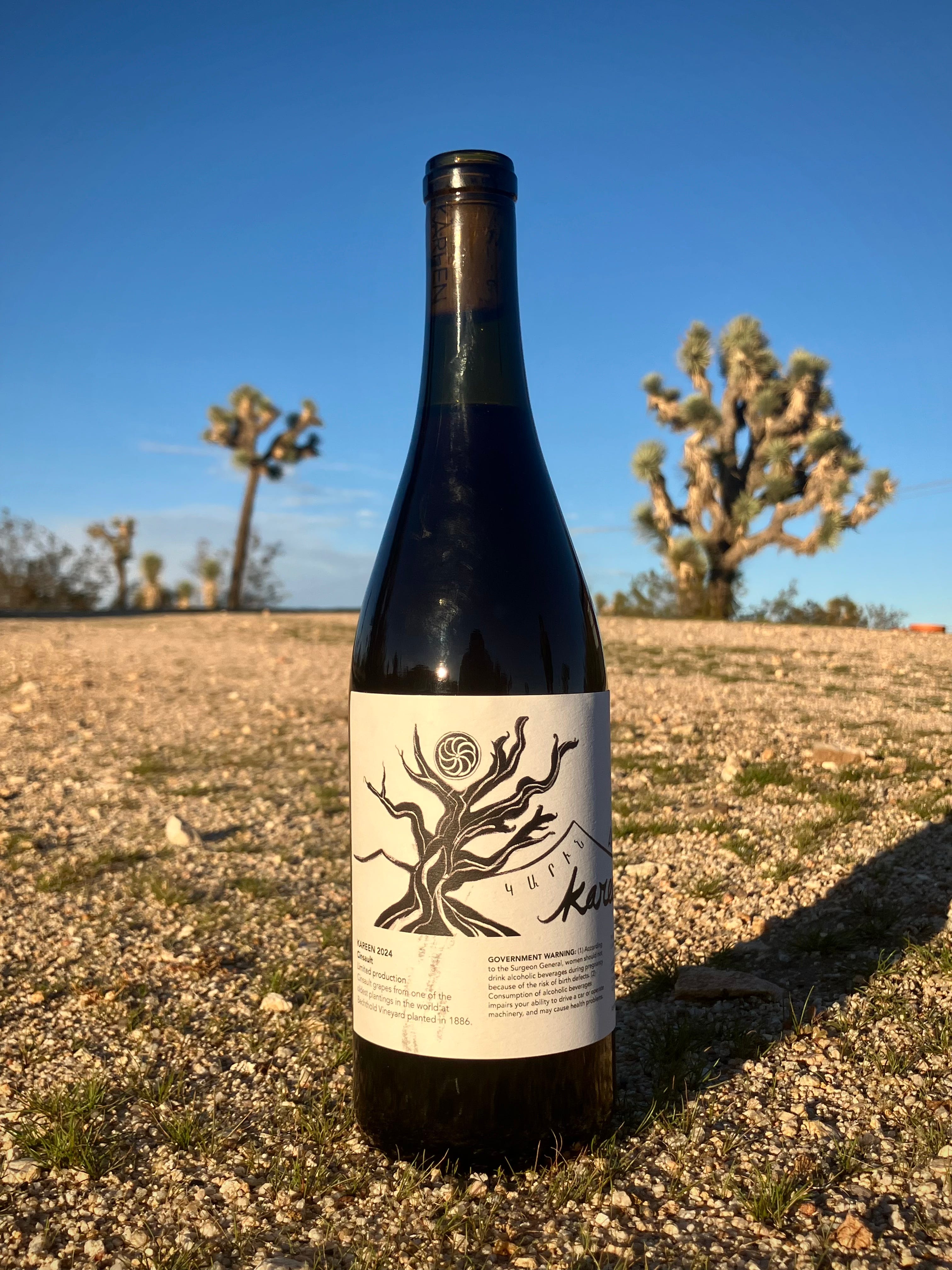
Kareen 2024 Cinsault: The Cinsault comes from one of the oldest vineyards in the world, the Bechthold Vineyard, planted in 1886. The wine is dumb good! Light-bodied, with aromas of violets and bark, and flavors of chocolate-covered berries. Just a touch of tannin. I drank it in the desert, under the stars, and it was perfect.
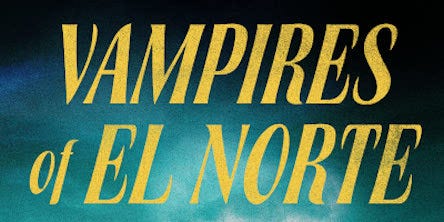
The Vampires of El Norte by Isabel Cañas
A moody, romantic, slightly spooky historical novel set during the Mexican-American War… with vampires.
“It’s got a love story, a mysterious creature wreaking havoc, fog, chaparral—just a really fun read.”-Rose
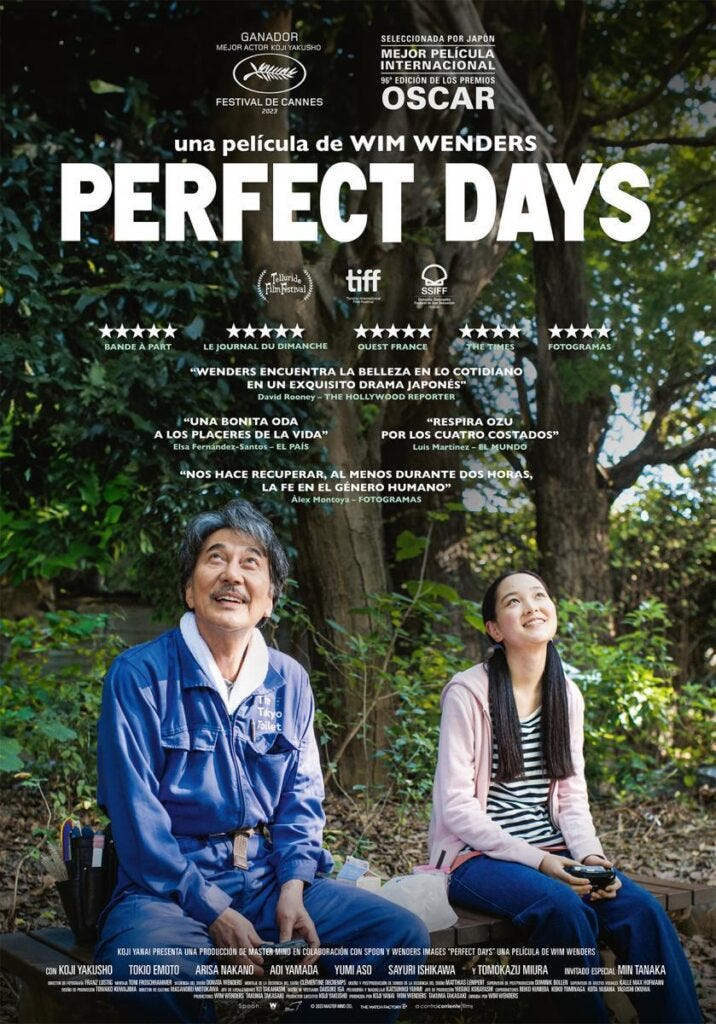
Perfect Days (Japan)
A quiet, meditative film Rose watched start-to-finish without touching her phone—rare these days.
“It’s about gratitude and being present. Just beautiful.”-Rose
Binh Minh Quan (Oakland)